

The people behind Phase One.
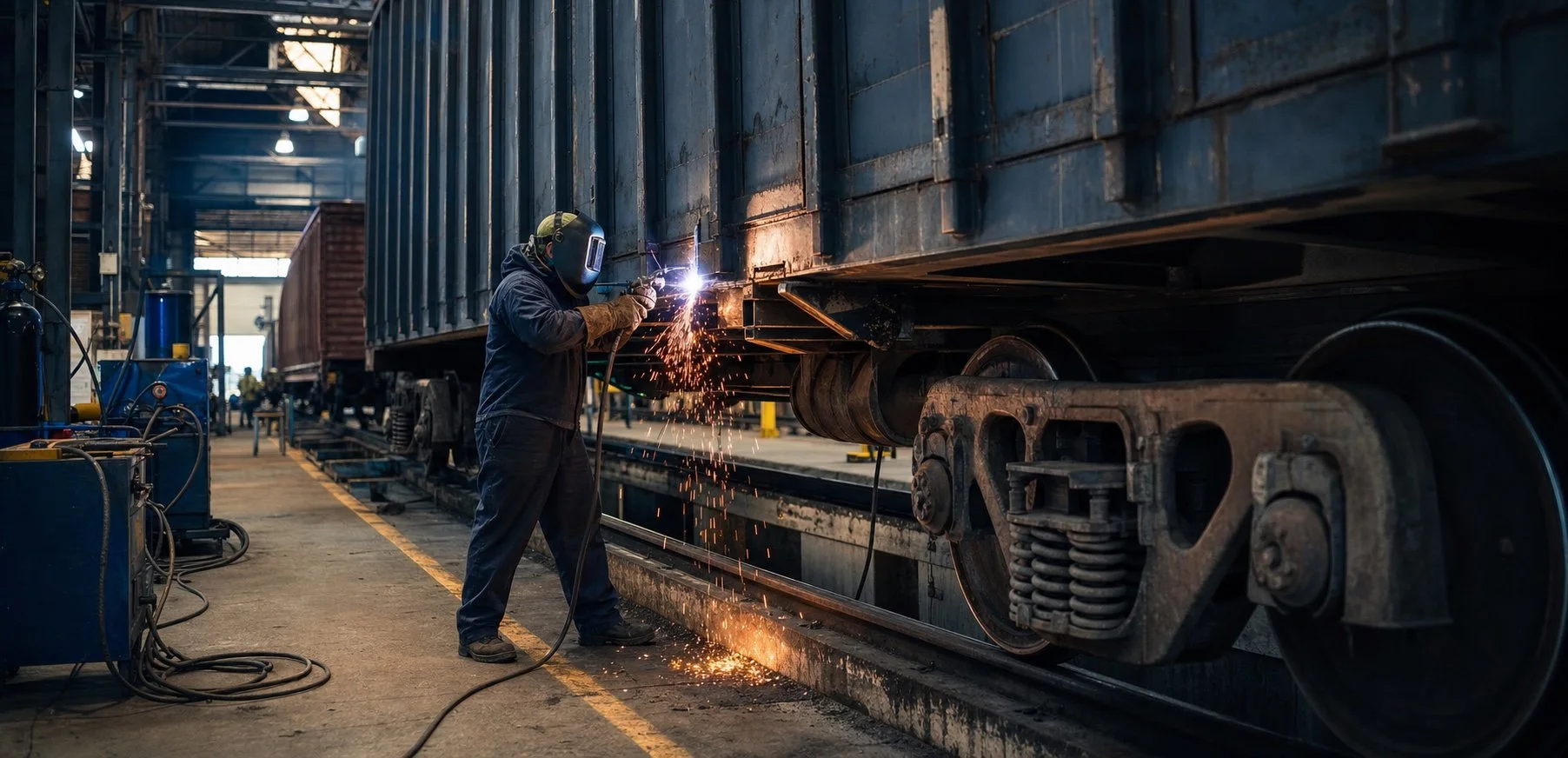
Operating Phase One will take rail, mechanical, process, environmental, maintenance, administrative, commercial, workforce-development, and supervisory experience.
 Representative industry image
How the work fits together
A railcar service job passes through several hands.
A car has to be won, scoped, planned, moved, serviced, checked, documented, invoiced, and released. The operating work depends on disciplined commercial and people systems.
Scope
Customer request, estimate, commercial review, schedule, car records, and inbound planning.
Move
Rail movements, switching, securement, track protection, and job briefings.
Check
Condition, last-contained product, records, inspection, and work authorization.
Work
Cleaning, repair, blasting, coating, lining, and material handling as approved.
Verify
Safety, environmental, quality, testing, hold points, and release review.
Maintain
Preventive maintenance, utilities, tools, facilities, and equipment repairs.
Closure
Final records, customer updates, invoice readiness, performance data, and onward routing.
Workforce Development
Turn approved role requirements into workforce plans, recruiting, onboarding, qualification records, refresher needs, and development priorities.
Revenue Operations
Coordinate opportunity data, estimates, scope, pricing approvals, capacity, commercial handoffs, invoicing readiness, and revenue reporting.
The workforce rail map
Ten families. One operating team.
Select a stop to see the work, core skills, and possible roles. Final titles and staffing levels have not been set.
Rail & Yard Operations
Plan and carry out railcar movements, protect people working around the tracks, and keep the yard lined up with the service schedule.
Work this family supports
Core skill stack
Possible roles
Qualification boundary:
Common requirements
Skills needed across the site.
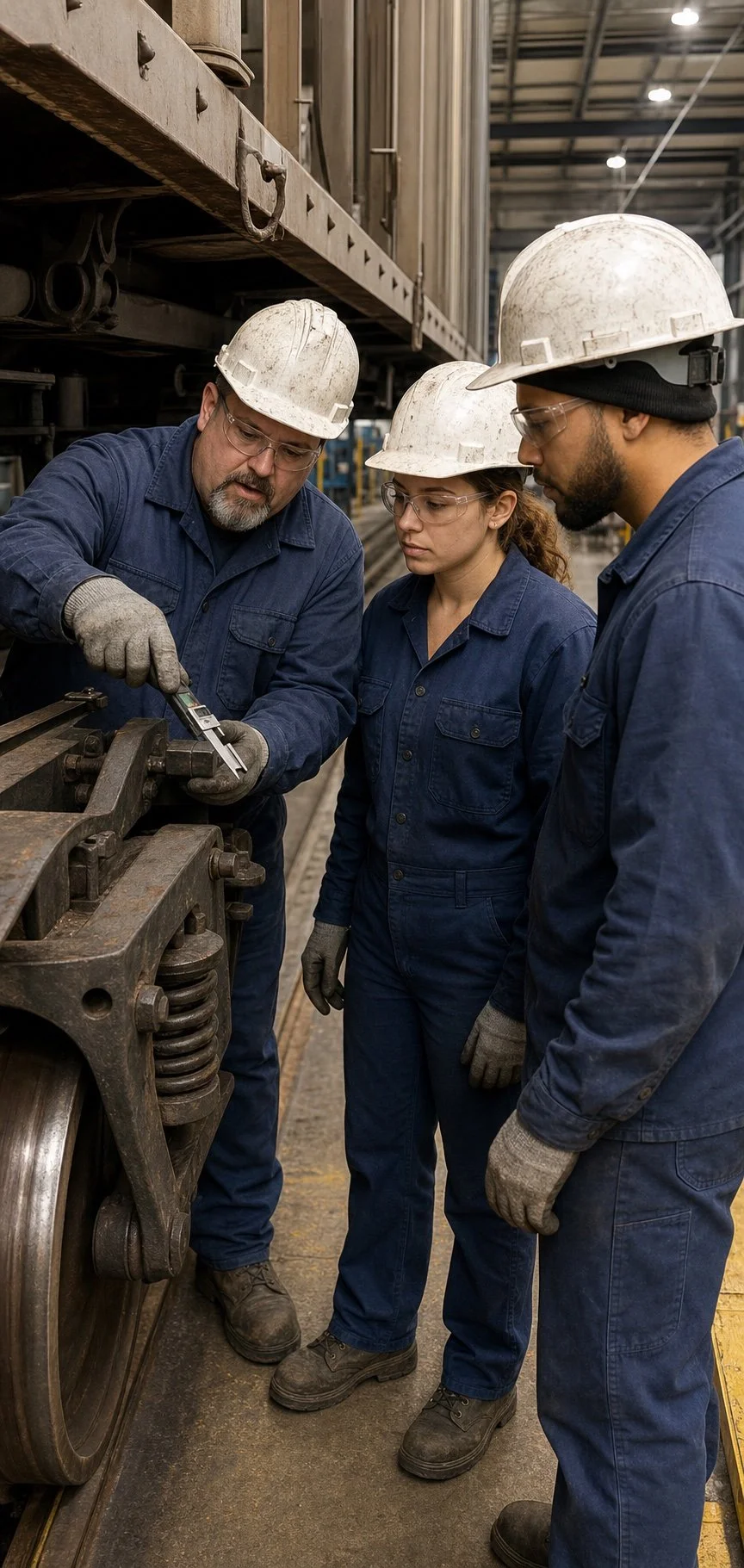
Each job family has its own technical requirements. Across the site, Northline will need people who can work safely, follow procedures, keep accurate records, and coordinate with other functions.
 Representative industry image
Safety & Risk Recognition
Job briefings, hazard recognition, PPE, lockout/tagout, stop-work responsibility, emergency response, and task-specific controls.
Technical & Craft
Tools, measurement, mechanical systems, process equipment, welding, coatings, electrical, or controls, depending on the role.
Rail & Material Knowledge
Railcar components, movement and securement rules, commodity information, shipping records, routing, and owner instructions.
Quality & Documentation
Work instructions, inspection points, calibrated tools, traceable records, nonconformance control, and disciplined release.
Digital & Data
Work orders, car tracking, photographs, reports, planning systems, access controls, and data accuracy.
Supervision & Problem Solving
Shift handoffs, work planning, coaching, troubleshooting, root-cause review, and coordination across the site.
Workforce Systems
Role profiles, recruiting coordination, onboarding, qualification matrices, training records, refreshers, and workforce planning.
Commercial & Revenue Discipline
Opportunity tracking, estimating, pricing controls, capacity alignment, change management, invoice readiness, and forecasting.
What this could mean locally
A practical opportunity for the North Country.
If Phase One moves forward, it could bring rail, shop, environmental, maintenance, administrative, commercial, workforce-development, and supervisory work together in Groveton. That gives people more than one way to enter and more than one direction to grow.
Room for different backgrounds
The workforce could include experienced tradespeople and rail professionals, new technicians, career changers, commercial coordinators, workforce specialists, and future supervisors.
Training based on actual openings
Programs should be built around approved positions, installed equipment, defined tasks, and the real hiring schedule.
Useful industrial skills
Safety, quality, maintenance, welding, rail knowledge, and documentation are useful at Northline and elsewhere in the regional economy.
Clear expectations
Employees should know what they are qualified to do, what they need to learn next, and what is required to move into a lead or specialist role.
Future workforce information
Interested in future work or training?
Northline is not accepting employment applications through this page. Questions about future workforce planning or training can be sent through the contact page.